Flat Roof Replacement in Wickliffe from $5. $5 to $14 a square foot, and in this climate the fall matters more than the membrane. Free inspection and a written quote.
Small flat areas squeezed between close-set houses, where the practical question is how a roll of membrane and a crew get to them at all. Worth settling before the price rather than discovering on the morning.
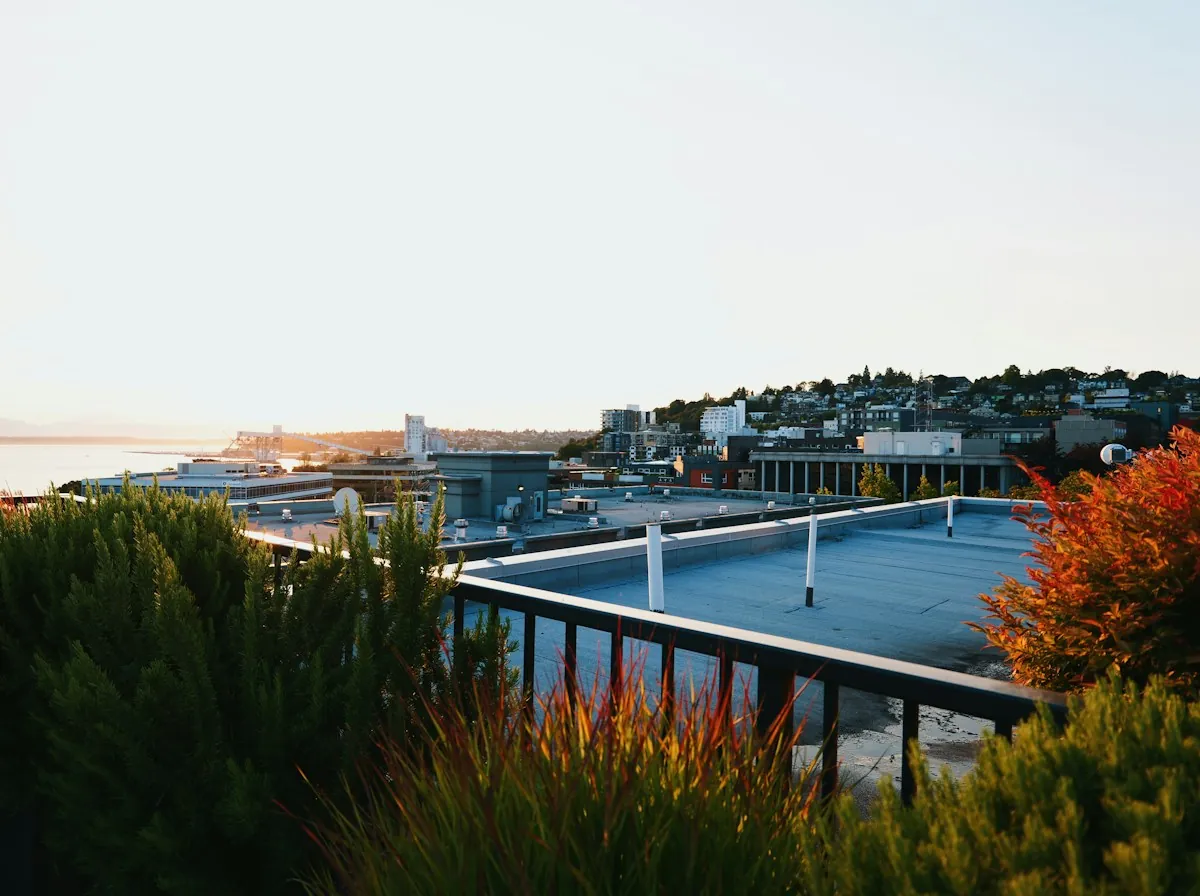
Flat roofing installs at $5 to $14 per square foot: EPDM at $5 to $9 and TPO at $6 to $12 across normal residential work. Most of the low-slope roofing on houses here is a rear addition, a porch, a dormer top or a garage, sitting next to a pitched roof and usually draining onto or through it.


Flat roofing installs at $5 to $14 per square foot: EPDM at $5 to $9 and TPO at $6 to $12. What is different here is winter. A low-slope roof in the snowbelt carries load for weeks rather than hours, and meltwater runs under the snowpack rather than off it. Small roofs put the material cost at the bottom of the range and push access and staging up as a share of it. On two-family houses the party wall abutment is priced as its own detail rather than absorbed into the slope.
A simple rectangle with a real fall, at accessible height, draining somewhere sensible. Most post-war garages and rear additions qualify.
Junctions and parapets. Where a low-slope roof meets a wall the upstand has to clear the snow that will sit against it, and on a corridor building with internal drainage the outlets and coping are the job.
An outlet that freezes is an outlet that is not there. Drainage sized and sited for meltwater rather than for a summer downpour is what separates a membrane that lasts from one tested at every seam.
Small roofs on close-set lots, which keeps the material cost down and makes access and staging a real part of the price. Where the house is two-family, the party wall abutment is the detail worth looking at hardest.
Another Lake County department again -- neighboring cities do not share a registration, however close they are.
Worth knowing before you start ringing round, particularly if this started in January.
Lake-effect snow falls heavier here than a few miles inland and, more importantly, it LIES. A roof carries that load for weeks, the melt-refreeze cycle runs over and over at the eaves, and the ceiling below reports the whole winter's work during the first proper thaw. Which is why the calls arrive in a cluster, in the same two weeks, right across the city at once.
Small roofs on close-set Lake County lots, which keeps the material cost at the bottom of the range and makes access and staging a real line in the price.
Small simple slopes on modest houses, so material is a smaller share of the job than usual and labor and access a bigger one.
Permit required, and registration with it.
Inter-war roofs. More geometry than square footage.
Post-war and simple. Layer count is the variable.
Streets that age together, and work that arrives in waves.
House roofs and parapet roofs, streets apart.
Lake County, and the heaviest exposure here.
Lakefront. Wind loading is the design case.
The questions this job turns on, answered up front.
EPDM at $5 to $9 a square foot and TPO at $6 to $12, and on normal residential additions either will do the job if the detailing is right. What matters far more here is the upstand height and the drainage, because both have to work with snow sitting on the roof rather than rain running off it.
Not in itself -- water that clears within a day or two is normal. Water still there a week later is a seam being tested continuously. In winter it is worse than that, because ice over an outlet means the roof has no drainage at all until it thaws.
Rarely the full term, and less often here than most places. The rating describes the material under test conditions, not a roof on a particular house in a particular climate. On this shore the governing factors are the melt-refreeze cycle at the eaves, roof space ventilation, and how well the thing was nailed on day one. A 30 year product commonly gives 20 to 25 real years in the snowbelt, and a roof nailed badly is on a shorter clock from the moment it went on.
It is a Florida rule and it has no force in Ohio. The 25% rule comes from the Florida Building Code Existing Building, where repairing or replacing more than a quarter of a roof within a year can require the whole roof to be brought up to current code. Ohio has no equivalent provision. It shows up in searches here because national content repeats it without saying which state it belongs to -- and anyone quoting it at you in Ohio is citing the wrong code book.
It depends on the municipality, and in Euclid the answer is yes -- a roof replacement needs a building permit from the Building and Housing Department. That matters beyond the paperwork: the permit is the point at which the city checks that your contractor is registered with it, so skipping the permit removes the only formal check in the process. It also leaves unpermitted work on the property, which surfaces awkwardly when the house is sold.
Registration verifiable with the city before anybody starts. The permit taken out properly, because Ohio requires one here.