Flat Roof Replacement in South Euclid from $5. $5 to $14 a square foot, and in this climate the fall matters more than the membrane. Free inspection and a written quote.
Inter-war houses here carry flat roofs over rear additions, porches and sunrooms added at various dates, often over a tired built-up roof that nobody has ever taken off. What is underneath decides whether this is a recover or a replacement.
Flat roofing installs at $5 to $14 per square foot: EPDM at $5 to $9 and TPO at $6 to $12 across normal residential work. Most of the low-slope roofing on houses here is a rear addition, a porch, a dormer top or a garage, sitting next to a pitched roof and usually draining onto or through it.


Flat roofing installs at $5 to $14 per square foot: EPDM at $5 to $9 and TPO at $6 to $12. What is different here is winter. A low-slope roof in the snowbelt carries load for weeks rather than hours, and meltwater runs under the snowpack rather than off it. Inter-war roofs have more surface and more detail than their plan area suggests, so expect a higher figure per square foot of house than a post-war equivalent. Valleys and dormers are hand work, and hand work is where the hours go.
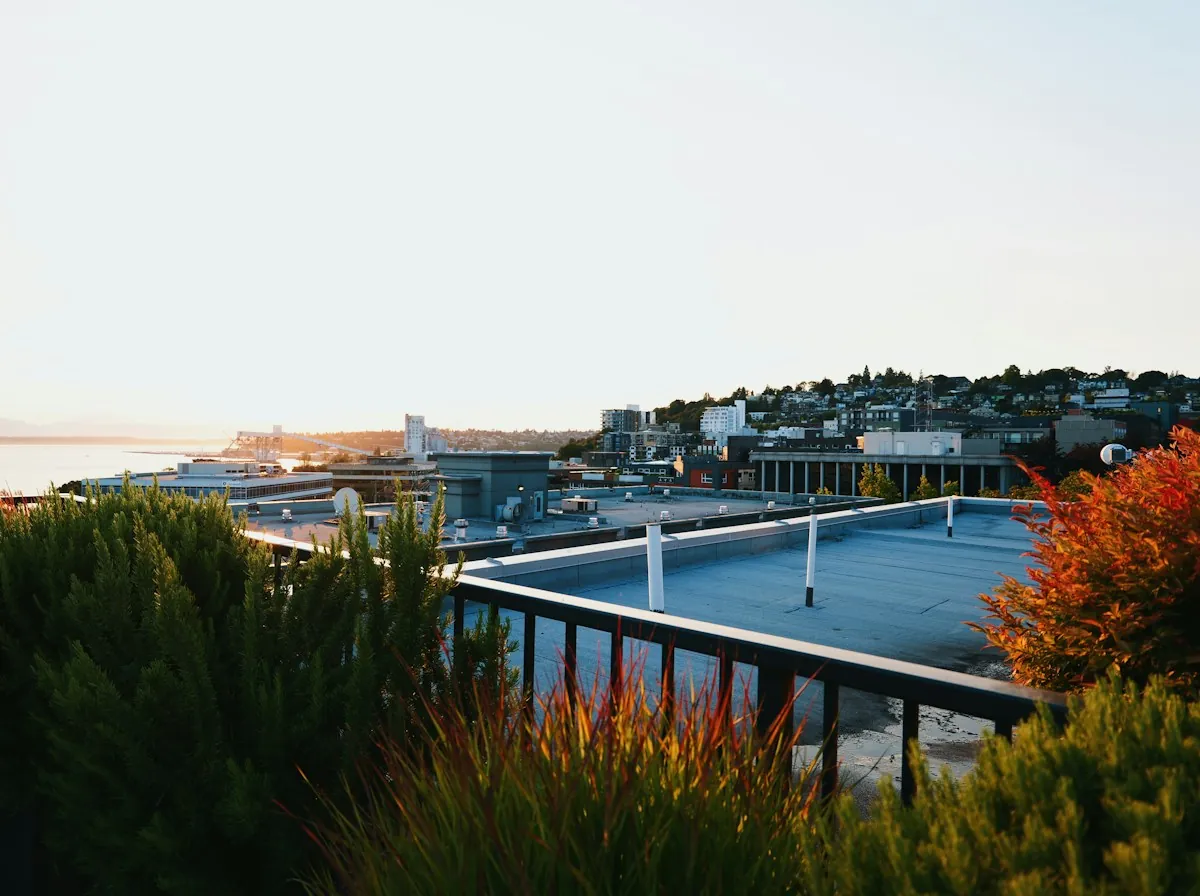
A simple rectangle with a real fall, at accessible height, draining somewhere sensible. Most post-war garages and rear additions qualify.
Junctions and parapets. Where a low-slope roof meets a wall the upstand has to clear the snow that will sit against it, and on a corridor building with internal drainage the outlets and coping are the job.
An outlet that freezes is an outlet that is not there. Drainage sized and sited for meltwater rather than for a summer downpour is what separates a membrane that lasts from one tested at every seam.
Steeper, more broken-up roofs than the lake shore, which costs more per square foot in labor and has more details to fail. Being a few miles inland also takes the edge off the lake-effect totals without removing the freeze.
A different city means a different building department and a different registration -- being registered in Euclid counts for nothing here.
It takes one phone call, it costs nothing, and it works on us exactly as well as on whoever else quoted.
The Ohio Construction Industry Licensing Board licenses electrical, HVAC, hydronics, plumbing and refrigeration contractors. Roofing is not among them and never has been. A roofer telling you they are 'state licensed' in Ohio is describing something that does not exist for their trade.
A roof replacement in Euclid needs one. The permit is the point at which registration gets enforced, so a contractor who would rather skip the permit is skipping the only check in the process -- and leaving you with unpermitted work on the house when you sell it.
Registration does not travel. A firm registered in Euclid is not thereby registered in Willowick, and Willowick is not even in the same county. Always ask whether they are registered where YOUR house is.
Inter-war stock means more roof than the square footage suggests: steeper pitches, dormers, and hips and valleys that all take hand work.
Steep inter-war roofs shed snow far better than shallow ones, which helps at the eaves and hurts in the valleys, where it all ends up.
Permit required, and registration with it.
Post-war and simple. Layer count is the variable.
Streets that age together, and work that arrives in waves.
House roofs and parapet roofs, streets apart.
Lake County, and the heaviest exposure here.
Small lots, two-family roofs, its own registration.
Lakefront. Wind loading is the design case.
The questions this job turns on, answered up front.
EPDM at $5 to $9 a square foot and TPO at $6 to $12, and on normal residential additions either will do the job if the detailing is right. What matters far more here is the upstand height and the drainage, because both have to work with snow sitting on the roof rather than rain running off it.
Not in itself -- water that clears within a day or two is normal. Water still there a week later is a seam being tested continuously. In winter it is worse than that, because ice over an outlet means the roof has no drainage at all until it thaws.
It depends on the municipality, and in Euclid the answer is yes -- a roof replacement needs a building permit from the Building and Housing Department. That matters beyond the paperwork: the permit is the point at which the city checks that your contractor is registered with it, so skipping the permit removes the only formal check in the process. It also leaves unpermitted work on the property, which surfaces awkwardly when the house is sold.
In Greater Cleveland, most houses between 1,500 and 2,500 square feet cost $10,000 to $14,500 for a full replacement in architectural asphalt, with the wider local range running $8,500 to $21,000. Per square foot that is $3.50 to $8.00, with architectural product typically $5.00 to $6.70 and basic three-tab at the bottom of the range. Costs in this corner of the state sit a little above the Ohio average, which reflects labor rather than materials.
Middle-aged rather than old. Twenty years is well inside the normal service life of architectural asphalt and at the end of it for three-tab, so the first useful question is which one you have. After that it is condition, not the date: granule loss, brittleness, how flat the covering lies, whether the deck is sound. In this climate add one more -- whether it has been damming, because a roof with twenty winters of meltwater under its bottom courses is older at the eaves than it is anywhere else.
Registration verifiable with the city before anybody starts. The permit taken out properly, because Ohio requires one here.